

Find the Best Vitamin C for Acne Scars
Once a breakout is gone, the marks it leaves behind can feel just as frustrating. If you're looking for the best vitamin c for acne scars, you're on the right track. A stable, well-made serum acts like a dedicated repair crew for your skin, working to bring back its clarity and smooth texture without causing more trouble.
Why Vitamin C is Your Go-To for Fading Acne Scars
The battle doesn't always end when the pimple disappears. Often, you're left with dark spots or a rough, uneven texture. This is exactly where a potent antioxidant like Vitamin C comes in, tackling the aftermath of acne from two different angles.
Fading Those Lingering Dark Spots
Those reddish-brown spots that hang around long after a blemish has healed? That's post-inflammatory hyperpigmentation (PIH). It happens when the inflammation from the breakout sends your skin's pigment-producing cells into overdrive, creating too much melanin.
Think of Vitamin C as a supervisor on a production line. It steps in and tells an enzyme called tyrosinase to slow down. By gently pumping the brakes on excess melanin production, Vitamin C helps those dark spots gradually fade away, revealing a more even and glowing complexion.
Rebuilding Skin and Smoothing Texture
Sometimes, acne leaves behind indented scars, which are a sign that collagen was lost during the healing process. Vitamin C doesn't just work on color; it's also a powerhouse for rebuilding your skin's fundamental structure.
Vitamin C is a non-negotiable ingredient for producing collagen. Without it, your body simply can't create the strong, stable proteins that keep skin firm and bouncy. This makes it absolutely essential for improving the look of pitted or atrophic acne scars.
By firing up collagen production, Vitamin C helps to plump the skin from the inside out. This smooths over those textural irregularities and reinforces your skin's support system, making it stronger and more resilient. Along with Vitamin C, employing broader strategies to reduce inflammation can also make a huge difference in how your skin heals and recovers.
Decoding the Different Types of Vitamin C
Stepping into the world of skincare can feel like you’re learning a whole new language, especially when you run into ingredient names like L-Ascorbic Acid or Sodium Ascorbyl Phosphate. When you're on the hunt for the best vitamin C to tackle acne scars, knowing the difference between these forms is what separates guesswork from real results.
For acne-prone skin, this distinction is everything. Some forms of vitamin C are powerhouses but can be irritating, while others are gentler and more stable—a much smarter choice for skin that's already feeling stressed out from breakouts. At Neutralyze, our expertise lies in understanding these key ingredients and choosing the ones that deliver maximum benefits with minimal irritation.
The Original Powerhouse: L-Ascorbic Acid
L-Ascorbic Acid (L-AA) is the purest and most potent form of vitamin C. It's the most researched, with tons of evidence showing it’s fantastic for boosting collagen and fading dark spots. When you see a study praising vitamin C, it's often talking about L-AA.
But all that power comes with a few strings attached. L-Ascorbic Acid is notoriously unstable. It degrades quickly when exposed to light, air, and heat, losing its effectiveness. For skin that’s already prone to acne, its high potency and low pH can also spell irritation, redness, and sensitivity—the last things you want to deal with.
Gentler, Smarter Derivatives for Acne Scars
This is where vitamin C "derivatives" come into play. They are cleverly modified versions of L-Ascorbic Acid, designed to be more stable and much kinder to the skin while still delivering brilliant results.
At Neutralyze, we are ingredient experts, and we strategically formulate with these intelligent derivatives because they offer consistent benefits without causing irritation. Two of the best for acne-prone skin are:
-
Sodium Ascorbyl Phosphate (SAP): This is a hero ingredient for anyone managing both active breakouts and the scars they leave behind. It's far more stable than L-AA and works at a pH level your skin loves, which dramatically cuts down the risk of irritation. Better yet, some research suggests SAP even has antimicrobial properties that can help keep acne-causing bacteria in check. This is why it's a cornerstone in many of our formulations.
-
Tetrahexyldecyl Ascorbate (THDA): This is a luxurious, oil-soluble form of vitamin C. Because it's oil-based, it can sink deeper into the skin to tackle discoloration right at the source. It’s known for being exceptionally stable and gentle, making it a fantastic choice for sensitive types focused on brightening and repair.
This visual guide helps break down how vitamin C works on a cellular level—it slows down melanin production to fade dark spots while simultaneously helping rebuild the collagen that gives skin its smooth structure.
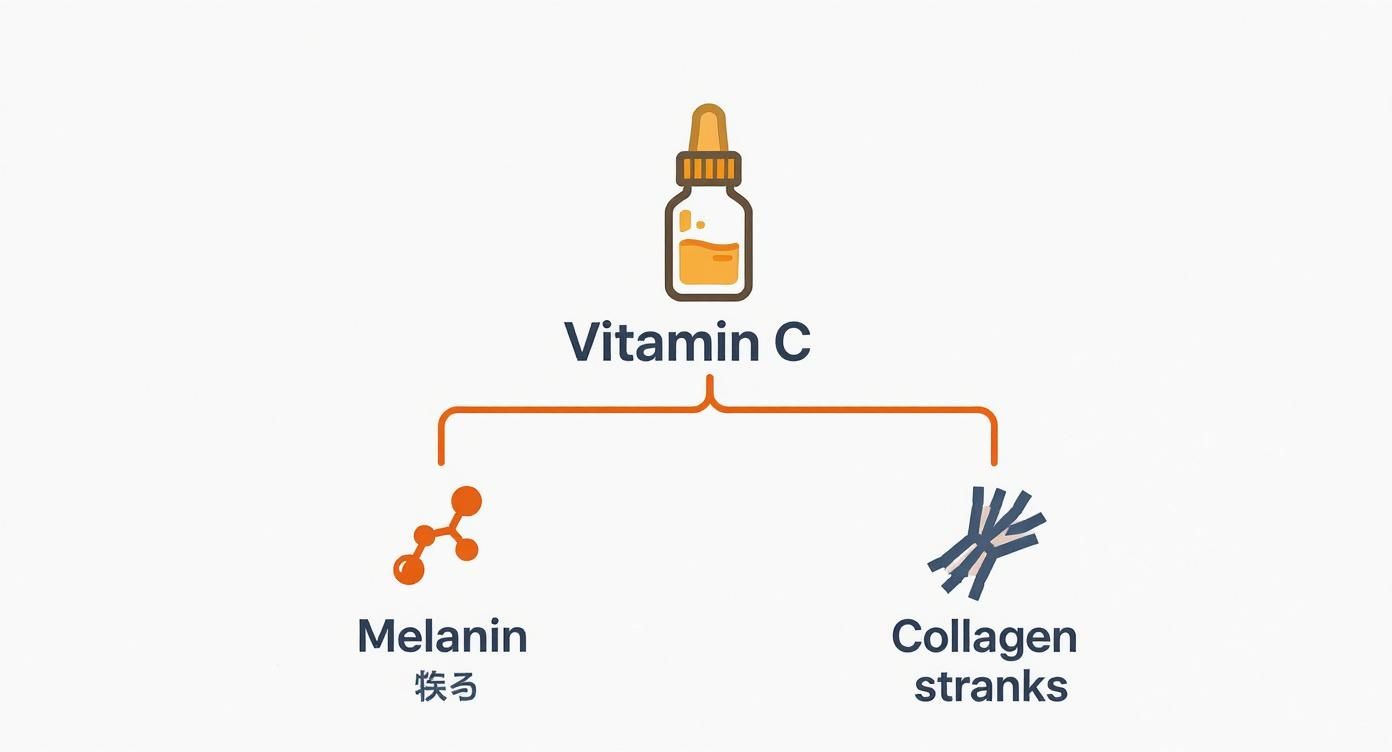
As you can see, its dual-action power is what makes it such a vital ingredient for improving both skin tone and texture after a breakout.
To make picking the right one a little easier, here’s a quick comparison of the forms we’ve discussed.
Comparing Vitamin C Forms for Acne-Prone Skin
| Vitamin C Type | Potency Level | Stability | Best For Skin Type | Key Benefit for Acne Scars |
|---|---|---|---|---|
| L-Ascorbic Acid (L-AA) | Very High | Low (unstable) | Normal, Oily, Resilient | Fast-acting brightening and collagen boosting. |
| Sodium Ascorbyl Phosphate (SAP) | Moderate | High (very stable) | Oily, Acne-Prone, Sensitive | Fades spots with minimal irritation; has antimicrobial benefits. |
| Tetrahexyldecyl Ascorbate (THDA) | High | High (very stable) | All Skin Types, including Dry & Sensitive | Deeply penetrates to fade stubborn discoloration. |
Ultimately, choosing a derivative like SAP or THDA means you’re picking a formula designed for stability and endurance. You can trust that the product will stay effective from the first drop to the last, working gently but consistently to fade scars and bring back a healthy, even-toned complexion.
How to Choose a Powerful Vitamin C Formula
Picking the right type of vitamin C is a solid start, but the real power comes from the entire formula. A single ingredient can only go so far. Its performance truly takes off when it’s backed by a team of complementary actives. This is what separates a basic product from an intelligent, results-driven solution for fading those stubborn acne marks.
It’s a common myth that a higher percentage of vitamin C is always better, especially if you have acne-prone skin. The sweet spot is typically a 10-20% concentration, which is potent enough to deliver real benefits without causing irritation. Pushing higher can sometimes backfire, and the last thing your skin needs while it’s healing is more inflammation.
Building a Synergistic Powerhouse Formula
Think of vitamin C as the star player on a basketball team. It can score, but it's much more effective with a solid supporting cast. In skincare, these teammates don't just boost vitamin C's effectiveness; they bring their own unique skills to the court, creating a formula that tackles acne scars from all angles.
The most famous power trio in skincare for a reason includes:
- Vitamin E (Tocopherol): This antioxidant is vitamin C’s best friend. Together, they essentially recharge each other, offering much longer-lasting protection against the environmental stress that makes discoloration worse.
- Ferulic Acid: Another antioxidant hero, ferulic acid acts like a stabilizer for both vitamins C and E. It dramatically enhances their ability to fight off free radicals and even out your skin tone.
Key Ingredients That Amplify Scar Fading
Here at Neutralyze, we know that a truly effective formula is about the big picture. We look beyond the basics to include ingredients that work in harmony with vitamin C to speed up the healing process and deliver changes you can actually see. Finding the best vitamin C for acne scars means looking for these powerhouse partners.
And this isn't just theory—it's backed by clinical proof. One 12-week study looked at a gel that combined vitamin C with azelaic acid, bakuchiol, and licorice root. The results were impressive. By the end of the trial, 72.5% of patients saw visibly more radiant skin with a noticeable reduction in discoloration and redness. You can read the full research on this powerful ingredient combination to see the data for yourself.
Some of the most effective supporting ingredients to look for are:
- Azelaic Acid: A gentle exfoliant celebrated for its ability to calm inflammation and dial down hyperpigmentation.
- Licorice Root Extract: A natural skin brightener that works by inhibiting the enzyme that creates dark spots in the first place.
- Bakuchiol: A plant-based retinol alternative that helps smooth skin texture and boost collagen, but without the typical irritation.
When you focus on a complete, well-rounded formula instead of just a single ingredient, you’re not just buying a vitamin C serum. You’re investing in a product designed for total skin renewal.
Integrating Vitamin C into Your Daily Routine
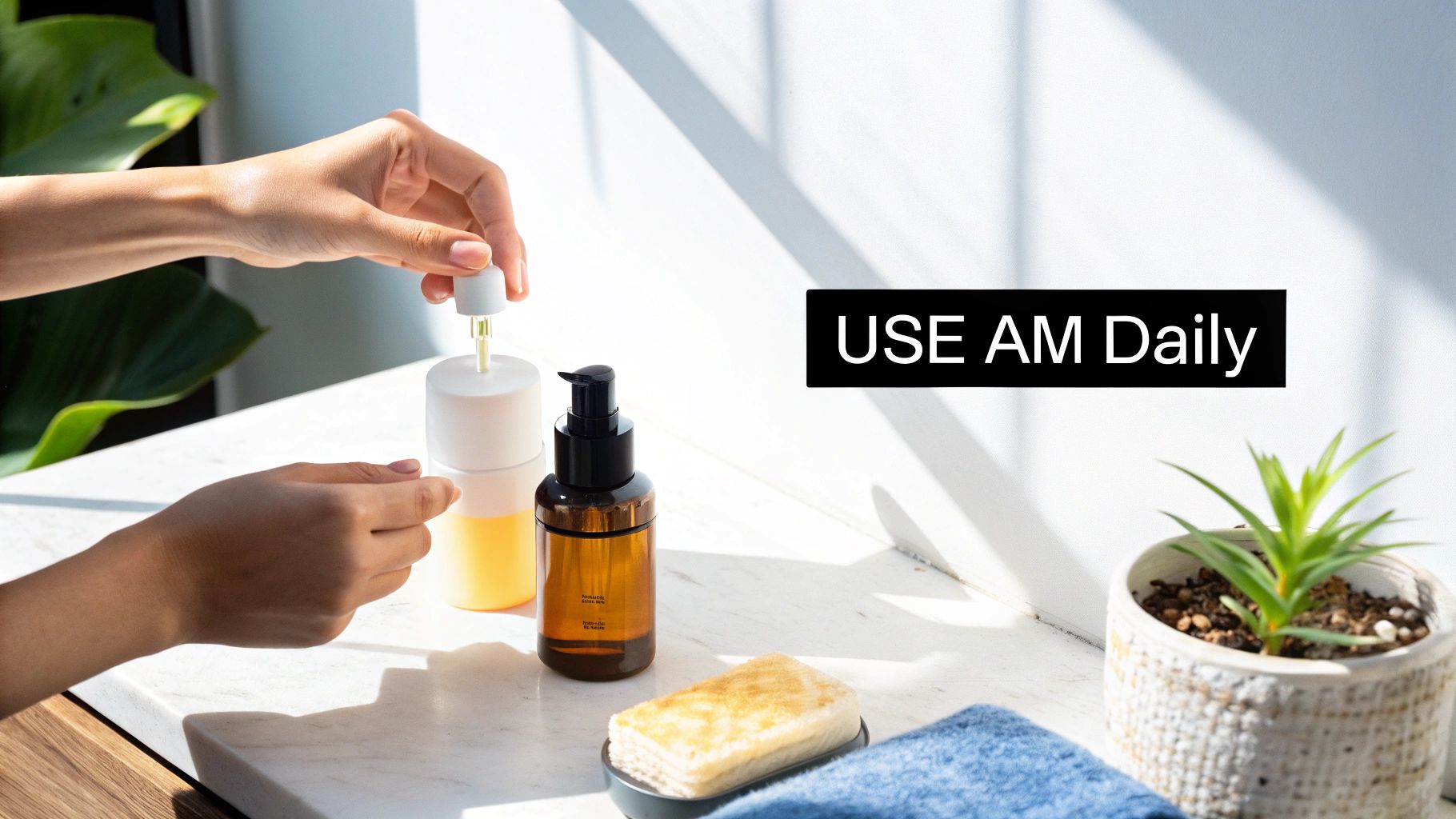
Finding a powerhouse vitamin C serum is a huge win, but its real magic for fading scars comes down to using it correctly and consistently. Getting this antioxidant hero into your daily lineup is pretty straightforward, but a few key steps can make all the difference in getting that clear, even-toned skin you're after.
The best time to apply it is in the morning. This gives you a vital shield against environmental aggressors—like UV rays and pollution—that can make existing marks darker and slow down the healing process. Make it a non-negotiable part of your morning ritual.
The Correct Application Order for Maximum Impact
How you layer your skincare is everything. It literally determines whether your products can actually get into your skin to do their job. For a vitamin C serum to be truly effective, it has to go onto clean skin, well before any heavier creams or oils create a barrier.
Here’s the simple, effective order to follow every morning:
- Cleanse: Always start with a gentle cleanser. You need a clean canvas, free of oil and grime from overnight.
- Apply Vitamin C Serum: A few drops are all you need. Pat it gently onto your dry face and neck. Let it sink in.
- Moisturize: Once the serum has fully absorbed, follow up with your moisturizer to hydrate and lock everything in.
- Protect with SPF: This is the most crucial step, and it's not optional. Sunscreen prevents UV rays from darkening your scars, which allows the vitamin C to actually do its brightening work. Without it, you’re fighting a losing battle.
Navigating the Initial Stages
Whenever you're adding a potent new active to your routine, it's smart to ease into it. We always recommend doing a patch test first on a small, discreet area to check for a reaction.
Some people might go through a short "purging" phase, where it seems like they're breaking out more. This happens when the increased cell turnover pushes underlying congestion to the surface. It should pass.
True irritation is different. That’s persistent redness, stinging, or itching. If that happens, dial back your use to every other day or consider switching to a gentler formula. At Neutralyze, we specifically formulate with stable, less-irritating derivatives to help avoid this from the get-go, making our products a safer bet for sensitive skin.
Finally, patience is your best friend here. While you might notice a bit of a glow within a few weeks, seeing a real, significant change in the best vitamin C for acne scars can take 8-12 weeks of daily, consistent use. You have to stick with it—the payoff is absolutely worth the commitment.
Boosting Your Results with Professional Treatments
A consistent at-home routine is the foundation for clear, healthy skin, but some stubborn scars just won't budge without a little extra help. This is where professional treatments come in.
Combining your daily vitamin C serum with in-office procedures can seriously accelerate your progress, taking your results from good to truly great. Think of your daily skincare as your foundational diet and exercise, while professional treatments are like targeted personal training sessions. Together, they create a powerful strategy for skin renewal.
These procedures work by either removing the outermost layers of damaged skin or creating tiny, controlled micro-injuries. This sends a powerful signal to your body to kickstart its natural healing and rebuilding processes. It not only addresses the scar tissue directly but also makes your at-home products work that much harder by allowing them to penetrate deeper.
Treatments That Work Well with Vitamin C
Pairing your at-home care with targeted treatments can make a world of difference. Your dermatologist will know the best approach for your specific scars and skin type, but here are some of the most effective options:
- Microneedling: This procedure uses ultra-fine needles to create tiny channels in the skin, triggering a major collagen and elastin response. Following up with your vitamin C serum can supercharge that healing process.
- Laser Therapy: Various lasers can resurface the skin and break up dark spots and redness. Using a calming, antioxidant-rich routine afterward is key to protecting that fresh, new skin.
- Chemical Peels: These treatments use acids (like glycolic acid) to exfoliate the top layers of skin, revealing a much brighter, smoother surface underneath.
This chart shows the kind of significant improvement you can see in atrophic (indented) acne scars after microneedling treatments—a process that is perfectly supported by a daily vitamin C regimen.
The visual evidence really drives home how professional intervention can dramatically reduce the depth and appearance of indented scars, setting the stage for a smoother texture.
Clinically Proven Combinations
The teamwork between professional treatments and vitamin C isn't just anecdotal—it’s backed by solid science.
One study, for example, looked at a routine combining professional-grade glycolic acid peels with a daily topical vitamin C. The results showed a statistically significant improvement in both acne scar severity and post-inflammatory hyperpigmentation. You can read more about these compelling clinical findings to see just how effective this one-two punch can be.
This holistic approach—combining powerful in-office procedures with a dedicated at-home routine—is the key to getting professional-level results. The treatments accelerate the physical renewal, while your daily serum provides the ongoing antioxidant protection and collagen support needed for lasting improvement.
Other ingredients can also play a role. For instance, advanced treatments often use peptides to stimulate collagen and promote skin healing. Incorporating supportive therapies like peptide therapy can further boost the skin’s regenerative power. By building a comprehensive plan, you give your skin everything it needs to heal more effectively and maintain that hard-won clarity.
How to Choose the Right Vitamin C for Your Acne Scars
Trying to find the best vitamin C for acne scars can feel like searching for a needle in a haystack. But when you know what to look for, the process gets a lot simpler. The real secret isn't just about finding vitamin C—it's about finding the right vitamin C in the right formula.
First things first, you'll want to focus on a stable and gentle form of vitamin C. Something like Sodium Ascorbyl Phosphate is a fantastic choice for anyone with acne-prone skin because it’s effective without being harsh.
But a great product is more than just one ingredient. Look for formulas that also include synergistic helpers—think azelaic acid, licorice root, or other antioxidants. When these ingredients work together, they seriously amplify the brightening and smoothing results. And of course, daily use followed by sunscreen is non-negotiable if you want to protect your skin and see real progress.
Why We Recommend Neutralyze
This is exactly where Neutralyze shines. We don't just add Vitamin C to a product; our expert formulators build intelligent, multi-action systems that tackle acne and its aftermath from every angle. This deep understanding of key ingredients is what sets us apart.
We intentionally use stable, gentle, and effective forms of Vitamin C, like Sodium Ascorbyl Phosphate, that zero in on both the discoloration and the uneven texture left behind by breakouts. This means you get all the benefits of vitamin C without worrying about causing more inflammation.
At Neutralyze, we believe in creating solutions that work with your skin, not against it. Our commitment to scientifically-backed, multi-active formulas provides a clear, reliable path to healthier skin and helps you effectively get rid of acne scars.
Choosing Neutralyze is more than just buying a product; it’s an investment in a comprehensive, thoughtfully designed solution. It’s the smart choice for anyone who's serious about fading their acne scars for good.
If you want to explore more strategies for treating stubborn marks, take a look at our complete guide on how to get rid of acne scars.
Your Vitamin C & Acne Scar Questions, Answered
Let's be real—adding a new active ingredient to your routine, especially when you're dealing with acne, can feel a bit daunting. As experts in acne treatment, we get these questions all the time. Let's clear up some of the most common concerns about using the best vitamin C for acne scars.
"Will Vitamin C Make My Acne Worse?"
This is probably the number one fear we hear, and it's a completely valid one. If you've ever tried a potent vitamin C serum and broken out, you're not alone. The pure form, L-Ascorbic Acid, is notoriously acidic and can be too much for reactive, acne-prone skin, sometimes leading to irritation and new blemishes.
But here’s the good news: it's all about the type of vitamin C you choose. This is precisely why Neutralyze products are formulated with much gentler, more stable derivatives like Sodium Ascorbyl Phosphate. Our expertise in ingredient selection means you get a product that's less likely to cause irritation and even has properties that help keep acne in check, making it the ideal solution for breakout-prone skin.
"How Long Will It Actually Take to See Results on My Scars?"
Patience is the name of the game here. While you might see a brighter, more even-toned complexion in just a few weeks, those stubborn, darker marks left behind by pimples—that post-inflammatory hyperpigmentation—take a bit longer to fade.
Think in terms of months, not days. For a noticeable reduction in the appearance of acne scars, you'll need to use your vitamin C serum every single day for at least 8 to 12 weeks. Consistency is everything.
"Can I Use Vitamin C with My Other Acne Treatments?"
Absolutely, you just need a smart game plan. Vitamin C plays well with other acne-fighting heroes like salicylic acid and benzoyl peroxide, but you don't want to throw them all on your face at the same time.
The best way to do this is to split them up. We always recommend using your vitamin C serum in the morning—it acts as an antioxidant shield against daily environmental damage. Then, use your other treatments like salicylic acid at night. This gives each ingredient the space to work its magic without overwhelming your skin.
Ready to find a formula that finally works for you? The products at Neutralyze are specifically designed with stable, effective, and gentle ingredients to tackle both discoloration and texture, giving your skin the backup it needs. Explore the collection and find your perfect match.


