

7 Best Options for what to put on a pimple overnight
Waking up to an angry, red pimple can ruin your day before it even starts. The immediate question is always the same: what to put on a pimple overnight to make it disappear by morning? The right targeted treatment can dramatically reduce a pimple's size, redness, and inflammation while you sleep, turning your skincare routine into a powerful acne-focused strategy. However, the wrong choice can lead to more irritation, dryness, and a longer healing time, making the problem worse. This is where understanding the science behind active ingredients becomes critical.
This guide provides a roundup of well-studied ingredients and methods for a pimple overnight. We will explore how key actives like Salicylic Acid, Benzoyl Peroxide, and Sulfur work inside the pore. At Neutralyze, we believe that informed choices lead to the best results, which is why we’ll break down the pros and cons of each option, from potent chemical exfoliants to targeted retinoids. You'll learn not just what to use, but precisely how to apply it for maximum impact without compromising your skin barrier. Get ready to learn how to conquer blemishes effectively, so you can wake up with calmer, clearer skin.
1. Salicylic Acid Spot Treatment: The Pore-Unclogging Pro
When you need a reliable, science-backed answer for what to put on a pimple overnight, salicylic acid is a top-tier choice. This beta-hydroxy acid (BHA) is a powerhouse ingredient renowned for its unique ability to penetrate deep into your pores. Unlike other exfoliants that work only on the skin's surface, salicylic acid is oil-soluble, allowing it to dive past sebum and dissolve the mixture of oil and dead skin cells that creates clogs.
This deep-cleaning action makes it exceptionally effective against blackheads and whiteheads. By clearing the blockage from within the pore lining, it addresses the root cause of many blemishes. When applied as an overnight spot treatment, it works to reduce inflammation, calm redness, and inhibit the growth of acne-causing bacteria, helping to shrink that angry pimple while you sleep.
How to Use Salicylic Acid Effectively
To maximize benefits and minimize potential irritation, proper application is key. Follow these steps for the best results:
- Apply to Clean, Dry Skin: Always start with a freshly cleansed face to ensure the active ingredient can penetrate without obstruction.
- Start Slowly: Begin by applying the treatment once daily, preferably at night. If your skin responds well, you can increase to twice daily.
- Moisturize: Salicylic acid can be drying. Follow up with a non-comedogenic moisturizer to maintain your skin's hydration barrier.
- Sunscreen is a Must: BHAs increase sun sensitivity. Always apply a broad-spectrum SPF 30+ during the day to protect your skin.
- Avoid Conflicts: Be cautious when using other potent actives. Avoid applying salicylic acid at the same time as vitamin C or retinoids until you know how your skin will react.
Neutralyze Insight: The Science of BHAs
Salicylic Acid's power lies in its chemical structure, which allows it to exfoliate deep inside the oily environment of a pore. Neutralyze elevates this principle by combining 2% Salicylic Acid with Mandelic Acid, a gentle yet effective AHA. Our patented formulas use this dual-acid synergy to provide both deep-pore cleansing and surface exfoliation. This multi-action approach moves beyond a simple spot product to a comprehensive routine for acne-prone skin. If you want to learn more about how targeted ingredients can help you, explore these ways to help a zit look smaller overnight on Neutralyze.com.
2. Benzoyl Peroxide Spot Treatment: The Bacterial Brawler
For a fast-acting, dermatologist-recommended solution for what to put on a pimple overnight, benzoyl peroxide is a classic and powerful choice. Unlike salicylic acid, which focuses on dissolving pore clogs, benzoyl peroxide is an antimicrobial agent. Its primary function is to release oxygen into the pore, creating an environment where acne-causing bacteria (specifically Cutibacterium acnes) cannot survive.
This antibacterial action directly targets the source of inflammatory acne like pustules and papules. By eliminating the bacteria, it rapidly reduces the infection, inflammation, and redness associated with these types of breakouts. Applying it as an overnight spot treatment allows it to work uninterrupted, helping to significantly diminish the size and severity of a pimple by morning.
How to Use Benzoyl Peroxide Effectively
To harness its power without causing excessive dryness or irritation, careful application is essential. Follow these steps for the best results:
- Start with a Low Concentration: Begin with a 2.5% or 5% concentration to allow your skin to acclimate. Higher strengths are not always more effective and can be much more irritating.
- Apply a Thin Layer: After cleansing, apply a small, thin layer directly onto the pimple. Using too much product will not speed up healing and will increase the risk of dryness.
- Protect Your Fabrics: Benzoyl peroxide is known to bleach fabrics. Be sure to use old or white pillowcases and towels to avoid staining.
- Moisturize Thoroughly: This ingredient can be very drying. Always follow up with a non-comedogenic moisturizer to support your skin's barrier.
- Be Sun Smart: It can increase your skin's sensitivity to the sun. Daily application of a broad-spectrum SPF 30 or higher is non-negotiable.
3. Sulfur-Based Spot Treatments: The Gentle Skin Purifier
An age-old remedy with modern backing, sulfur is a dependable and surprisingly gentle option when considering what to put on a pimple overnight. This naturally occurring mineral has been used for centuries to address skin ailments, and it works its magic on acne through a multi-pronged approach. Sulfur helps to dry out the surface of the skin, absorbing excess oil (sebum) that can contribute to clogged pores and breakouts.
As a keratolytic agent, sulfur also helps soften and shed the top layer of dead skin cells, preventing blockages from forming. Its antibacterial properties create an inhospitable environment for the P. acnes bacteria, reducing inflammation and calming redness. This makes it particularly effective for inflammatory pimples and a great alternative for those with sensitive skin who find ingredients like benzoyl peroxide too harsh.
How to Use Sulfur-Based Treatments Effectively
To get the most out of a sulfur spot treatment while minimizing its well-known scent and potential for dryness, follow these key steps:
- Apply to Clean, Dry Skin: Start with a thoroughly cleansed and dried face to ensure the treatment can work directly on the blemish without any barriers.
- Use a Thin Layer: A little goes a long way. Apply a thin, even layer directly onto the pimple. Don't slather it over unaffected skin.
- Moisturize to Prevent Dryness: Sulfur is a drying agent. Always follow up with a non-comedogenic moisturizer to keep your skin barrier balanced and hydrated.
- Ventilate Your Space: Sulfur has a distinct smell. Applying it in a well-ventilated room can make the overnight experience more pleasant.
- Be Patient: While it can reduce redness overnight, consistent use over 1-3 weeks often yields the best results for clearing persistent spots.
- Great for Combination Therapy: Sulfur plays well with other ingredients. It can be safely incorporated into a routine that also includes salicylic acid or other actives, targeting acne from different angles.
4. Azelaic Acid Spot Treatment: The Multi-Tasking Marvel
When deciding what to put on a pimple overnight, azelaic acid emerges as a uniquely versatile and gentle yet powerful option. This naturally occurring dicarboxylic acid, found in grains like barley, wheat, and rye, works on multiple fronts to combat acne. It boasts significant antibacterial properties, specifically targeting the acne-causing bacteria within pores. Simultaneously, it acts as a potent anti-inflammatory agent, calming the redness and swelling associated with angry breakouts.
What makes azelaic acid a standout overnight treatment is its ability to normalize skin cell turnover. It helps prevent the buildup of dead skin cells that clog pores, a process known as hyperkeratinization. This makes it highly effective not only for treating active pimples but also for preventing future ones. It's particularly celebrated for its benefits on sensitive, rosacea-prone skin and its remarkable skill in fading post-inflammatory hyperpigmentation (the dark marks left after a pimple heals).
How to Use Azelaic Acid Effectively
To get the most out of this ingredient without irritation, a careful and consistent approach is crucial. Follow these guidelines for optimal results:
- Apply to Clean, Dry Skin: For maximum absorption, apply a thin layer to the affected area after cleansing and toning, once your skin is completely dry.
- Start with a Lower Concentration: If you are new to azelaic acid, begin with a 10% concentration to allow your skin to acclimate before considering prescription strengths.
- Patience is Key: While it helps reduce inflammation overnight, azelaic acid's full effects on skin texture and hyperpigmentation can take several weeks of consistent use.
- Layer with Care: It pairs well with many other ingredients, including niacinamide and hyaluronic acid. However, apply it before heavier creams or oils.
- Continue Post-Blemish: Use it on healing spots to prevent and treat the dark marks that often linger after a breakout has subsided.
Azelaic acid isn’t part of the Neutralyze line; if you’d like a routine built on salicylic acid and mandelic acid instead, read about the science behind Neutralyze.
5. Retinoid Spot Treatments: The Cellular Renewal Champion
When considering what to put on a pimple overnight for comprehensive, long-term results, retinoids are in a class of their own. These powerful vitamin A derivatives, including retinol (at-home) and tretinoin (prescription), work by accelerating your skin's natural cell turnover process. This rapid renewal helps to push dead skin cells and oil out of pores, preventing the clogs that form pimples in the first place.
More than just an exfoliator, retinoids also regulate sebum production, reduce inflammation, and stimulate collagen synthesis. This makes them uniquely effective not only for treating active blemishes but also for fading the post-inflammatory hyperpigmentation (dark spots) that pimples leave behind. An overnight retinoid treatment works diligently to unclog the pore, calm the existing breakout, and initiate the healing process, making it a true skincare multi-tasker.
How to Use Retinoids Effectively
Retinoids are potent and require a careful, methodical approach to avoid irritation, often referred to as "retinization." Follow these steps for a safe and effective experience:
- Start Low and Go Slow: Begin with a low concentration (like 0.25% retinol) and apply it only 2-3 times per week at night.
- Apply to Dry Skin: Wait at least 20 minutes after cleansing to ensure your skin is completely dry. Applying retinoids to damp skin can increase penetration and potential irritation.
- Use a Pea-Sized Amount: A small amount is sufficient for your entire face. Applying more will not yield better results, only more side effects.
- Sunscreen is Non-Negotiable: Retinoids significantly increase photosensitivity. You must apply a broad-spectrum SPF 50+ every single morning.
- Avoid Other Actives Initially: Do not use other strong ingredients like AHAs, BHAs, or vitamin C in the same routine until your skin has fully adjusted to the retinoid.
If retinoids feel too harsh for your skin, salicylic acid and mandelic acid are a gentler way to keep pores clear; see more ways to shrink a zit overnight.
6. Tea Tree Oil Spot Treatment: The Natural Antiseptic
For those seeking a more natural answer to what to put on a pimple overnight, tea tree oil stands out as a time-tested botanical remedy. Derived from the leaves of the Australian Melaleuca alternifolia tree, this essential oil is celebrated for its powerful antimicrobial and anti-inflammatory properties. It works by directly targeting and reducing the proliferation of acne-causing bacteria on the skin's surface.
When applied as an overnight spot treatment, its anti-inflammatory effects help to calm the redness and swelling associated with an active pimple. This natural approach offers an effective alternative to synthetic chemicals, making it a popular choice for those with sensitive skin or who prefer plant-based ingredients to help reduce a blemish while they sleep.
How to Use Tea Tree Oil Effectively
Tea tree oil is potent and must be used correctly to avoid skin irritation. Proper dilution and application are crucial for achieving the best results safely.
- Always Dilute: Never apply 100% pure tea tree oil directly to your skin. Mix one to two drops with about 12 drops of a carrier oil like jojoba, almond, or coconut oil.
- Perform a Patch Test: Before applying to your face, test the diluted mixture on a small, discreet area of skin (like behind your ear) and wait 24 hours to check for any adverse reactions.
- Targeted Application: Use a cotton swab to dab the diluted oil directly onto the pimple, avoiding the surrounding healthy skin to minimize the risk of dryness or irritation.
- Choose Pre-Formulated Products: For a safer, more reliable option, look for skincare products that contain tea tree oil at an effective concentration, typically between 5% and 15%.
- Discontinue if Irritation Occurs: If you experience excessive redness, burning, or stinging, stop using the oil immediately and cleanse the area.
Tea tree oil can vary in strength from bottle to bottle, so patch test it first and browse our guides for acne-prone skin for more ideas.
7. Niacinamide + Zinc Spot Treatment: The Barrier-Boosting Balancer
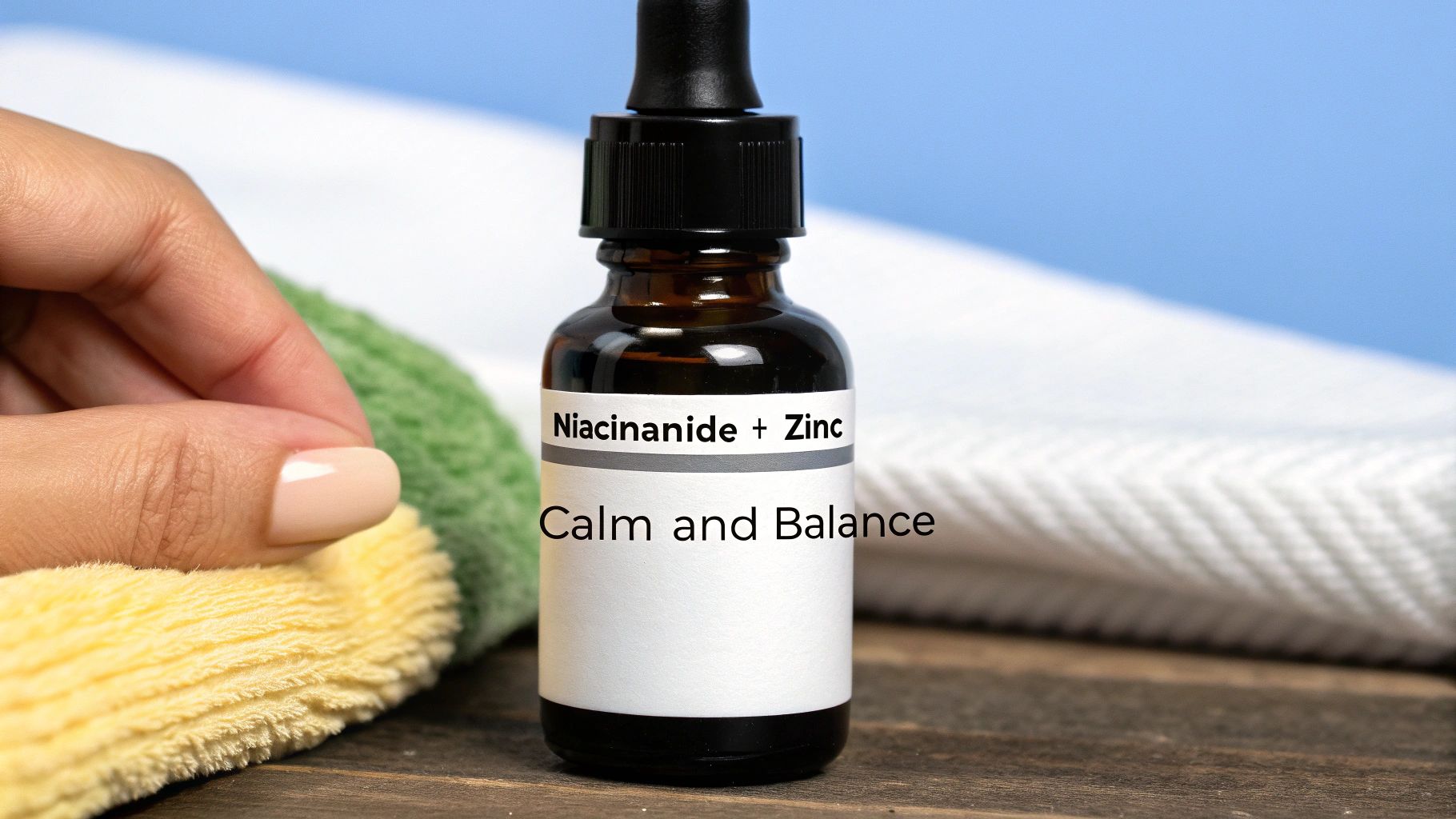
For those with sensitive or easily irritated skin looking for what to put on a pimple overnight, a niacinamide and zinc serum is an exceptional, gentle choice. Niacinamide, a form of vitamin B3, is a multitasking superstar that strengthens the skin's barrier, reduces inflammation, and regulates sebum production. When paired with zinc, a mineral known for its anti-inflammatory and oil-controlling properties, it creates a formidable duo against breakouts.
This combination works on clogged pores and uneven texture at the same time, without the harshness of some traditional actives. It helps an existing pimple look less red and keeps oil in check while improving overall skin health. It's an ideal overnight treatment because it supports the skin’s natural repair processes while you sleep, leading to a calmer, clearer complexion by morning.
How to Use Niacinamide + Zinc Effectively
To get the most out of this powerful yet gentle combination, follow these simple guidelines:
- Apply to Clean, Dry Skin: Start with a freshly cleansed face to allow the serum to absorb properly. A small, pea-sized amount is usually sufficient for the entire face or specific breakout zones.
- Consistency is Key: While it can help calm a pimple overnight, its primary benefits for oil regulation and prevention are seen with consistent use over 2-4 weeks.
- Layer Intelligently: Apply it after cleansing and before heavier creams or moisturizers. It works well alongside other acne-focused ingredients like salicylic acid and even retinoids.
- Ideal for Sensitive Skin: This duo is a fantastic option for those who find other treatments too drying or irritating.
- Use for Prevention: Don't just use it as a spot treatment. Applying it regularly to acne-prone areas can help maintain clear skin and prevent future breakouts.
Niacinamide and zinc layer well with a salicylic acid and mandelic acid routine; see how to layer salicylic acid and niacinamide.
Overnight Pimple Treatments — 7-Option Comparison
| Treatment | Complexity 🔄 | Resources / Application ⚡ | Effectiveness ⭐ / Time to results 📊 | Ideal use cases 💡 | Key advantages |
|---|---|---|---|---|---|
| Salicylic Acid Spot Treatment | Low 🔄 — simple overnight spot use; possible dryness/irritation | ⚡ 0.5–2% BHA; apply to clean, dry skin; moisturizer + SPF recommended; 1–2× daily | ⭐⭐⭐⭐ — visible reduction 8–12 hours 📊 | Oily/combination skin, clogged pores, inflamed pimples, prevention | Pore-penetrating exfoliant; fast-acting; affordable |
| Benzoyl Peroxide Spot Treatment | Low–Medium 🔄 — easy but can irritate/bleach fabrics | ⚡ 2.5–10%; start low (2.5%); use thin layer, old linens/pillowcase; moisturizer + SPF | ⭐⭐⭐⭐⭐ — visible improvement 12–24 hours 📊 | Bacterial/inflammatory acne, moderate breakouts | Strong antimicrobial action; no bacterial resistance |
| Sulfur-Based Spot Treatments | Low 🔄 — simple application; noticeable odor; slower onset | ⚡ 2–10%; apply thin layer at night; may combine with moisturizer; ventilate room | ⭐⭐⭐ — results typically 2–3 weeks 📊 | Sensitive skin, cystic acne, hormonal breakouts | Gentler keratolytic; reduces sebum; well tolerated by sensitive skin |
| Azelaic Acid Spot Treatment | Low–Medium 🔄 — mild tingling possible; consistent use needed | ⚡ 10–20% (at-home/prescription); apply AM/PM on dry skin; SPF advised | ⭐⭐⭐⭐ — gradual benefits 4–12 weeks; improves redness & PIH 📊 | Hormonal acne, rosacea-prone skin, post-inflammatory hyperpigmentation | Anti-inflammatory + antimicrobial; treats pigmentation; suitable for sensitive skin |
| Retinoid Spot Treatments (Retinol/Retinoids) | High 🔄 — requires slow build-up and careful layering | ⚡ Various strengths (retinol 0.25–1%; prescription retinoids); strict SPF; avoid certain actives initially | ⭐⭐⭐⭐⭐ — full benefits 4–12 weeks; prevents comedones & improves scarring 📊 | All acne types, long-term prevention, anti-aging concerns | Powerful cell-turnover agent; treats acne and improves texture/scarring |
| Tea Tree Oil Spot Treatment | Low–Medium 🔄 — natural option but must be diluted and patch-tested | ⚡ 5–15% formulations or dilute with carrier oil; patch test 24h; apply to spot only | ⭐⭐⭐ — slower than BP; days–weeks for clear change 📊 | Mild bacterial acne; users preferring botanical/organic options | Natural antimicrobial and anti-inflammatory; affordable |
| Niacinamide + Zinc Spot Treatment | Low 🔄 — very gentle, easy to layer with other products | ⚡ Niacinamide 4–5% + Zinc 1–2%; use twice daily; minimal special care | ⭐⭐⭐⭐ — noticeable oil control/pore reduction in 2–4 weeks 📊 | Oily/combination and sensitive skin; prevention and maintenance | Gentle sebum regulation; barrier strengthening; compatible with other actives |
Beyond the Spot: A Holistic Strategy for Clear Skin
Navigating the world of skincare can feel overwhelming, especially when a new, angry pimple appears just before a big day. Throughout this guide, we've explored a powerful arsenal of ingredients, from the classic efficacy of Salicylic Acid and Benzoyl Peroxide to the targeted action of Sulfur, Azelaic Acid, and Retinoids. Each offers a unique mechanism for tackling breakouts, giving you a toolkit for deciding precisely what to put on a pimple overnight.
The goal, however, isn't just to react to blemishes; it's to create a skin environment where they are less likely to form in the first place. An effective spot treatment is your emergency response, but a consistent, well-formulated daily routine is your long-term strategy for success. Understanding the "why" behind each ingredient empowers you to build a proactive defense rather than constantly playing catch-up.
Key Takeaways for Lasting Clarity
To move from reactive treatment to proactive prevention, keep these core principles in mind:
- Ingredient Synergy is Key: Many of the ingredients we discussed, like Salicylic Acid and Niacinamide, work even better when part of a cohesive system. A single product can target a pimple, but a system addresses the entire acne cycle, from excess oil and clogged pores to inflammation and post-acne marks.
- Consistency Outweighs Intensity: Applying a harsh treatment once in a while is less effective than using a balanced, gentle system every day. Consistent use of proven actives helps maintain clear pores and calm skin, preventing breakouts before they can even start.
- Patience is a Virtue: Overnight treatments can dramatically reduce the size and redness of a pimple, but true skin transformation takes time. Stick with your chosen routine for at least 4-6 weeks to see significant, lasting results.
Your Actionable Next Steps
Beyond choosing a spot treatment, integrating simple lifestyle habits can significantly amplify your results. Consider your entire environment. For instance, bacteria and oils from your hair and face can accumulate on your pillowcase, potentially leading to new breakouts. Maintaining a clean sleep surface is a small but impactful step, and knowing the proper way to care for your bedding is essential. For those using gentle fabrics to protect their skin, learning how to wash silk pillowcases ensures you're not inadvertently undermining your skincare efforts. This holistic view, combining targeted treatments with a healthy environment, is the foundation of clear, resilient skin.
The Neutralyze Philosophy: Consistent Daily Care
At Neutralyze, our focus is on keeping skin in a healthy, balanced state. Our system is built around a science-backed combination of Salicylic Acid and Mandelic Acid, delivered through a simple cleanse, rejuvenate, and hydrate routine. This approach works because it doesn't just focus on one pimple; it supports the whole skin environment. By combining well-studied actives in gentle, effective formulations, we provide a comprehensive system for acne-prone skin and clear-looking, calm skin long-term. An effective spot treatment is your emergency tool, but a system like Neutralyze is your everyday routine for keeping pores clear. Your journey to clear skin is a marathon, not a sprint, and having the right daily allies makes all the difference.
Ready to move beyond spot fixes and embrace a complete system for lasting clear-looking skin? Neutralyze harnesses the power of Salicylic and Mandelic Acid in a synergistic system designed to keep pores clear and skin looking calmer. Discover the difference a comprehensive, science-backed approach can make for your skin today.