

How to Treat Chest Acne: A Clear-Skin Guide
Tired of dealing with chest acne and just want a straightforward plan that actually works? The fastest way to get it under control is to build a consistent, science-backed routine using ingredients that target breakouts at the source. It boils down to a simple, three-part system: cleanse with a medicated wash, apply a powerful spot treatment, and finish with a non-comedogenic moisturizer. This is your best bet for seeing real results, quickly.
Your Action Plan for Clearing Chest Acne
When you’re staring down a breakout on your chest, the last thing you want is a complicated, 10-step routine. The key to clearing things up is a powerful, no-nonsense approach. It’s important to remember that the skin on your chest isn't the same as the skin on your face—it can be thicker and more resilient, but also prone to irritation if you're not careful.
A solid game plan is built on two things: consistency and the right active ingredients. You can forget about a shelf full of products. Instead, zero in on a core trio that works together to cleanse, treat, and protect your skin. This simple method gets right to the heart of what causes chest acne in the first place—excess oil, clogged pores, and inflammation.
The Core Three-Step Strategy
Your immediate action plan should revolve around three essential steps. First up is cleansing, which is all about getting rid of the sweat, oil, and bacteria that build up during the day. A medicated body wash is a much better choice than a regular bar of soap because it starts the treatment process right there in the shower.
Next comes the targeted treatment. This is where you bring in the heavy hitters like Salicylic Acid and Mandelic Acid. These ingredients are brilliant because they get deep into your pores to break up clogs and gently exfoliate the skin's surface. This not only helps clear current breakouts but also prevents new ones from forming and can even help fade old marks.
Finally, don't skip the moisturizer! A non-comedogenic formula is crucial. It gives your skin the hydration it needs to maintain a healthy barrier without clogging your pores, which is key for preventing the irritation that can sometimes come with acne treatments.
A truly effective system doesn’t just fight existing pimples; it creates an environment where new ones are less likely to form. This proactive approach is fundamental to achieving and maintaining long-term clarity.
To make this super simple, I've put together a quick guide that breaks down exactly what to do and why each step matters. You can start this tonight.
Quick Guide to Clearing Chest Acne
This table outlines the essential first steps for treating chest acne. Follow this simple but powerful routine consistently for the best results.
| Action Step | Why It Works | How to Implement |
|---|---|---|
| Cleanse with a Medicated Wash | It washes away sweat, oil, and bacteria while delivering an initial dose of acne-fighting ingredients. | Use it daily in the shower, focusing on your chest. Work it into a gentle lather and let it sit for 30-60 seconds before rinsing off. |
| Apply a Targeted Treatment | This step delivers a concentrated punch of actives like Salicylic Acid to unclog pores and Mandelic Acid to exfoliate and calm inflammation. | After showering and patting your skin dry, apply a thin layer of a treatment serum or spray directly onto the affected areas. Let it absorb. |
| Use a Non-Comedogenic Moisturizer | It hydrates and reinforces your skin's protective barrier without blocking pores, which helps prevent dryness and irritation from treatments. | Once the treatment is fully absorbed, smooth on a light moisturizer. Do this morning and night if needed. |
Stick with these three core actions, and you'll be building a strong foundation for clearer, healthier skin on your chest. Consistency is everything.
So, Why Is Chest Acne Happening to You?
To really win the fight against chest acne, you first have to know your enemy. Those breakouts on your chest aren't just popping up for no reason; they're a clear signal from your skin that something is off balance. Figuring out your personal triggers is the single most important step toward finding a solution that actually lasts.
And if you're dealing with it, you're far from alone. For a lot of people, acne isn't just a facial issue. One major survey of young adults struggling with acne found that a staggering 45.6% reported breakouts on their chest. It’s a very common trouble spot. You can dig into the numbers yourself in the full survey results here.
The key is moving from a guessing game to a targeted strategy. Once you understand why it's happening, you can finally start to get ahead of it. Let's break down the usual suspects.
The Internal Triggers You Can't See
A lot of the time, the real root of the problem starts deep inside your body. These are the internal factors that create the perfect conditions for breakouts, mainly by telling your skin to produce more oil.
- Hormonal Fluctuations: Hormones are the undisputed heavyweight champions of acne triggers. A spike in androgens—think testosterone—can send your oil glands into overdrive. This is precisely why acne often flares up during puberty, around your menstrual cycle, or during other times of hormonal upheaval.
- Genetic Predisposition: Sometimes, it really is in your genes. If your parents or siblings had acne, there's a good chance you will too. Your genetics can dictate everything from how sensitive your skin is to hormones to its natural oiliness and how easily it gets inflamed.
These internal factors essentially set the stage for a breakout. When your pores are pumping out too much oil, it's only a matter of time before they get clogged, which is square one for any pimple.
Tackling these internal triggers means finding ingredients that can work against their effects on the skin. A smart formula won't just dry out a pimple; it will help regulate oil production and calm inflammation at its source, addressing the real problem instead of just the symptom.
External Factors Clogging Your Pores
While your internal chemistry might load the gun, it’s often the external factors that pull the trigger. These are the things in your day-to-day life that directly contribute to clogged pores and irritation on your chest.
One of the biggest offenders has a clinical name: acne mechanica. It's just a technical term for acne caused by friction, heat, and pressure. Think about the straps from your backpack digging in, a tight sports bra, or a synthetic workout shirt rubbing against your chest for an hour. This constant friction irritates the hair follicles and traps sweat and oil right where you don't want them, leading to angry, inflamed breakouts.
Trapped moisture and bacteria are another huge piece of the puzzle.
- Post-Workout Sweat: We’ve all been there—too tired to shower right after a gym session. But letting sweat, oil, and bacteria hang out on your skin creates the perfect breeding ground for acne.
- Pore-Clogging Products: That rich body lotion you love? The sunscreen you slather on? Even the conditioner that rinses down your back and chest in the shower can be the culprit. If a product isn't specifically labeled non-comedogenic, it has the potential to clog pores.
- Fabric Choices: Tight, synthetic fabrics like polyester or nylon are notorious for trapping heat and moisture against the skin. Making a simple switch to looser, breathable, natural fibers like cotton can make a world of difference by letting your skin breathe.
By pinpointing these triggers—whether it's a hormonal surge each month or that sweaty gym shirt you sit in for too long—you can start making smarter choices. This knowledge is your power. It allows you to find a treatment that targets your specific root causes, like the Neutralyze multi-action system designed to break up existing clogs, neutralize bacteria, and soothe that angry inflammation all at once.
Building Your Daily Skincare Routine for a Clear Chest
Alright, now that you know what's likely causing your chest breakouts, let's build a practical, day-by-day playbook to get your skin clear. If there's one secret to getting results, it's consistency. You don't need a complicated, ten-step regimen. Success comes from a simple, repeatable framework built on three core pillars: Cleanse, Treat, and Moisturize.
This structure is effective because it tackles acne from every angle. Cleansing gets rid of the surface-level gunk, treating targets the problem deep in the pores, and moisturizing protects your skin's barrier so it can heal properly. Let's break down the ideal morning and evening approach and talk about the powerhouse ingredients that actually make a difference.
The Foundational Cleanse
Every solid routine starts here. For chest acne, cleansing is more than just a quick wash—it's your first line of attack. You need a body wash that does more than just rinse off dirt and sweat; it has to start the process of clearing out your pores and knocking down bacteria.
A gentle lather with a medicated body wash is the way to go. In the shower, don't just soap up and rinse off immediately. Apply the cleanser to your chest, work it into a soft lather, and give it about 60 seconds to sit on the skin. This short pause gives the active ingredients enough time to penetrate and get to work.
The Power of Targeted Treatment
This is where the magic really happens. After cleansing and gently patting your skin dry, it’s time to apply a targeted treatment. This step is all about using specialized ingredients that go deep to clear up existing pimples and stop new ones from forming.
Formulation science truly matters here. At Neutralyze, we’ve found that the synergistic combination of Salicylic Acid and Mandelic Acid delivers incredible results for body acne. They work together beautifully.
- Salicylic Acid (BHA): Think of this as your deep-pore cleaner. Because it’s oil-soluble, it can actually get down into the greasy sebum clogging your pores and dissolve it from the inside out. It’s a game-changer for blackheads and whiteheads.
- Mandelic Acid (AHA): This is your surface perfector. As a gentle alpha-hydroxy acid, it helps slough off that top layer of dead skin, which is crucial for fading the stubborn dark marks (post-inflammatory hyperpigmentation) that breakouts leave behind. Its larger molecule size makes it much less irritating than other AHAs, which is ideal for the sensitive skin on the chest. If you want to dig deeper, you can read more about the importance of skin exfoliation.
But great ingredients are only half the battle. The real secret to incredible results is how those ingredients work together. This is where our science-backed approach, the salicylic acid + mandelic acid system, comes in. This system layers a cleanser, leave-on exfoliating pads, and a renewing moisturizer so each step supports the next.
At the same time, it enhances the delivery of the active ingredients, pushing them deeper into the pores where they're needed most. This means you get a more powerful effect from the Salicylic and Mandelic Acids to fight inflammation and clogs more efficiently—all without the harshness of a prescription. It's about working smarter with your skin, not harder against it.
The Essential Moisturize Step
The final step is moisturizing, and it's the one people with body acne almost always skip. This is a mistake. After using active treatments, your skin desperately needs hydration to repair its natural barrier. A healthy skin barrier is your best defense against irritation and bacteria.
The key is to choose the right kind of moisturizer. Look for one that is non-comedogenic, a term that literally means it’s been formulated not to clog pores. A lightweight, oil-free lotion is almost always the best bet for acne-prone skin. Applying it after your treatment helps lock in the active ingredients and prevents the dryness that can sometimes make acne worse.
A well-hydrated skin barrier functions better, heals faster, and is more resilient against bacteria and irritants. Skipping moisturizer can lead to dryness, which may cause your skin to overproduce oil to compensate, ultimately worsening your acne.
This structured approach is backed by what we know about truncal acne (breakouts on the chest and back). Research shows it’s incredibly common in young adults, with 45.6% to 54% reporting it. For many, it happens right alongside facial acne. The evidence strongly supports using non-prescription ingredients like salicylic acid to exfoliate pores and other agents to kill bacteria, as they effectively address the underlying triggers. You can review the detailed research on acne treatment approaches to learn more.
Assembling Your Morning and Evening Routines
Consistency is what turns good ingredients into great results. Here’s how to put it all together into a simple plan you can stick with.
Your Morning Chest Routine (2 Minutes):
- Cleanse: In the shower, wash your chest with your medicated cleanser. Let it sit for a minute before rinsing.
- Moisturize & Protect: Apply a thin layer of a lightweight, non-comedogenic moisturizer. If your chest will be exposed to the sun, follow up with an oil-free sunscreen of at least SPF 30.
Your Evening Chest Routine (3 Minutes):
- Cleanse: Wash off the day's sweat, oil, and grime. This is non-negotiable on days you've worked out.
- Treat: After patting dry, apply your targeted treatment serum or spray with Salicylic and Mandelic Acid. Give it a minute or two to fully absorb.
- Moisturize: Finish with your non-comedogenic moisturizer to support your skin’s overnight repair cycle.
This straightforward plan gives your skin exactly what it needs, twice a day, to get clear and stay clear. It’s all about creating the right environment for your skin to heal.
The Best Ingredients for Fighting Chest Acne
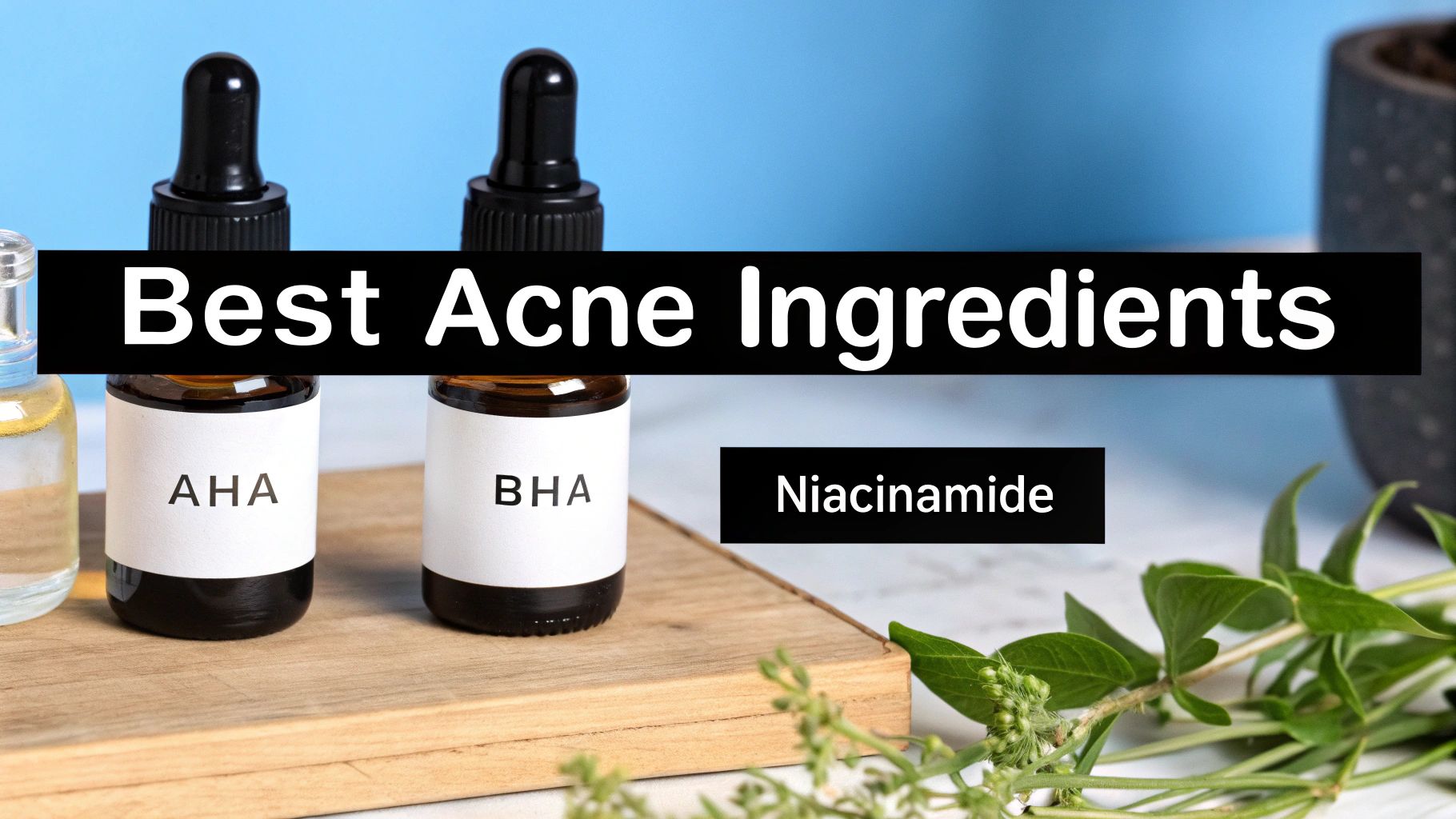
When it comes to the skin on your chest, not all acne ingredients are going to cut it. To really get a handle on those breakouts, you have to look beyond the flashy marketing and focus on the science-backed actives that actually work. This isn't about finding the harshest product on the shelf; it's about using the smartest ingredients that work together.
A well-formulated product will always beat a single-ingredient approach. Different active ingredients play different roles, and when they're combined, their effects are amplified—leading to clearer skin with far less irritation. Let's break down the true heroes for tackling chest acne and why they're so effective.
Mandelic Acid: The Gentle Resurfacer
Mandelic Acid is an alpha-hydroxy acid (AHA) that, frankly, doesn't get enough credit, especially for body acne. While other AHAs can be a bit too much for the sensitive chest area, Mandelic Acid has a larger molecular structure. What does that mean for you? It penetrates the skin more slowly and evenly, giving you great exfoliation without the aggressive sting.
Its main job is to dissolve the "glue" holding dead skin cells together on the surface. This simple action does two crucial things: it stops those cells from clogging your pores and helps fade the stubborn dark marks (post-inflammatory hyperpigmentation) that breakouts often leave behind. For chest acne, that dual benefit is a total game-changer.
Salicylic Acid: The Pore-Clearing Expert
If Mandelic Acid is working on the surface, think of Salicylic Acid as the specialist that goes deep. As a beta-hydroxy acid (BHA), it’s oil-soluble, which is its superpower. It can slice right through the gunk and oil deep inside your pores to break down the hardened plugs that turn into blackheads and whiteheads.
This ability to work from the inside out makes Salicylic Acid a non-negotiable for treating chest acne. It gets to the root of the problem, clearing up existing blemishes while stopping new ones from even starting. For large areas like the chest and back, using a Salicylic Acid spray is incredibly effective and convenient. You can learn more about how to get the most out of it in our guide to using a salicylic acid spray for body acne.
The magic really happens when you combine an AHA like Mandelic Acid with a BHA like Salicylic Acid. One refines the skin's surface and fades marks, while the other gets deep into the pores to clear them out. You're tackling acne from two critical angles at once.
Niacinamide: The Ultimate Calming Agent
At the end of the day, acne is an inflammatory condition. That's why an ingredient that can calm everything down is so vital. Enter Niacinamide (a form of vitamin B3), the ultimate skin soother. It works wonders on visibly reducing the redness and swelling that comes with those angry, inflamed pimples.
But Niacinamide is more than just a calming agent; it’s a powerhouse for strengthening your skin’s natural barrier. A healthy barrier is better at locking in moisture and keeping out bacteria—which is exactly what you need when you're using active acne treatments. It’s the ingredient that brings balance to your routine, ensuring your skin stays resilient while you fight breakouts.
This balanced approach is critical. Studies show that truncal acne pops up in 30-60% of people with facial acne, and chest-specific breakouts are seen in 45.6% of U.S. youth. This just underscores the need for comprehensive care that includes calming ingredients like Niacinamide.
Active Ingredient Comparison for Chest Acne
Choosing the right active ingredient can feel overwhelming, so I've put together this quick comparison to help you understand what each one brings to the table for clearing up chest acne.
| Ingredient | Primary Action | Best For |
|---|---|---|
| Mandelic Acid (AHA) | Gently exfoliates the skin's surface, dissolves dead skin cells. | Fading dark marks, improving skin texture, and preventing clogged pores with minimal irritation. |
| Salicylic Acid (BHA) | Penetrates deep into pores to dissolve oil and debris. | Clearing out existing blackheads and whiteheads, targeting breakouts at their source. |
| Niacinamide | Calms inflammation and strengthens the skin's moisture barrier. | Reducing redness and swelling from active pimples, supporting overall skin health during treatment. |
This table shows how each ingredient targets a different aspect of the problem. A truly effective treatment will leverage the strengths of all three to deliver comprehensive results.
The Neutralyze System: Cleanse, Exfoliate, Renew
Even the world's best ingredients are useless if they can't get where they need to go. This is where a complete routine comes into play. Neutralyze's salicylic acid + mandelic acid system is engineered to make sure the key actives in your products are working at their absolute peak.
This unique system creates an oxygen-deprived environment on the skin's surface, which helps neutralize acne-causing bacteria that thrive on oxygen. Even better, it enhances the penetration of ingredients like Mandelic and Salicylic Acid, pushing them deeper into the pores to do their job more effectively.
This synergy means you get faster, more noticeable results without needing a prescription. It's proof that the future of treating chest acne isn't just about the ingredients we use, but how intelligently we deliver them.
Lifestyle Changes That Can Make a Real Difference

While the right skincare routine is your foundation for clearing chest acne, the small choices you make every day can either help or hinder your progress. If you really want to get ahead of breakouts, you have to look beyond the bathroom cabinet. These simple lifestyle adjustments can create an environment where your skin can finally breathe and heal.
Rethink Your Wardrobe and Post-Workout Routine
A huge, often overlooked, contributor to chest acne is a condition called acne mechanica. This is just a clinical term for breakouts caused by heat, friction, and pressure against the skin. Unsurprisingly, your clothes and what you do after a workout are major players here.
Tight, non-breathable fabrics like polyester and nylon are the worst offenders. They trap sweat, oil, and bacteria right against your skin, creating the perfect storm for clogged pores. An easy swap is to wear loose-fitting, natural fibers like cotton for everyday activities. For workouts, it's worth investing in choosing moisture-wicking gym clothes that actively pull sweat away from your body.
Pro-Tip: Make it a non-negotiable rule to shower as soon as you can after a workout or any heavy sweating. Letting that mix of sweat, oil, and bacteria sit on your skin is an open invitation for new breakouts, and it can quickly undo all the hard work your skincare products are doing.
Audit What's Touching Your Skin—Even Indirectly
It might sound strange, but your laundry detergent and even your hair conditioner could be the sneaky culprits behind stubborn chest acne.
First, check your laundry products. Many popular detergents and fabric softeners are loaded with heavy perfumes and waxy residues that can easily irritate your skin or leave behind a pore-clogging film. A simple experiment is to switch to a fragrance-free, non-comedogenic (or "free and clear") detergent and skip the softener for a few weeks to see if it helps.
Next, think about your shower habits. Rich, creamy hair conditioners are great for your hair, but when you rinse, that coating slides right down your chest and back. To avoid this, try a simple reordering of your routine:
- Wash and condition your hair first.
- Clip your hair up and out of the way.
- Wash your body last, paying special attention to your chest and back with your acne-fighting cleanser. This ensures you’ve washed off any lingering conditioner residue.
Pay Attention to Your Diet and Hydration
The link between diet and acne is a hot topic, and it's incredibly personal. What triggers a breakout in one person might have no effect on another. That said, being more mindful of what you eat can be a powerful part of your overall strategy.
Some research suggests that foods with a high glycemic index—think sugary drinks, white bread, and other processed snacks—can cause a spike in blood sugar. This can, in turn, increase oil production and inflammation. You don't have to overhaul your entire diet, but simply cutting back might make a noticeable difference.
Try to focus on bringing in more:
- Whole Grains: Things like brown rice, quinoa, and oats provide steady energy.
- Leafy Greens: Spinach and kale are full of antioxidants that support skin health.
- Water, Water, Water: Staying hydrated is crucial. It helps your body flush out toxins and keeps your skin cells working properly.
These aren't about achieving perfection. It’s about making small, consistent choices that give your skin a fighting chance. When you reduce these external irritants and fuel your body well, you set your targeted skincare routine up for success.
When You Might Need to See a Dermatologist
Being smart about your skin health means knowing when to call in the professionals. For most people dealing with chest acne, a consistent, science-backed skincare routine is the perfect starting point. But sometimes, you need a little extra firepower. Deciding to book that appointment isn't a sign of failure—it's the next logical step to getting your skin where you want it to be.
Most mild to moderate chest acne will clear up beautifully with the right at-home care, especially when you’re using powerful ingredients like Salicylic Acid and Mandelic Acid. That said, you need to give it time. If you’ve been diligent every single day for 8 to 12 weeks and aren't seeing the progress you’d hoped for, it’s probably time to consider a dermatologist. This window gives your skin a full cycle to renew itself and respond to the treatment.
Red Flags That Signal It's Time for an Appointment
Sometimes, the type of acne you're dealing with is a dead giveaway that over-the-counter products just won't cut it. While they work wonders on standard whiteheads, blackheads, and smaller red pimples, they can fall short against more severe, deeper blemishes.
It’s a good idea to call a dermatologist if you’re seeing any of these signs:
- Deep, Painful Cysts: These aren't your average pimples. They're large, sore, and feel like they're deep under the skin. Because they're so much more likely to cause scarring, they really do need a doctor's attention.
- Widespread and Severe Breakouts: If the acne covers a large portion of your chest and is intensely inflamed, a professional can offer treatments to get it under control much faster.
- You're Already Scarring: Noticing that every breakout leaves behind a pitted scar or a stubborn dark spot? A dermatologist can help clear the active acne while also creating a plan to minimize and treat the scars.
Seeing a dermatologist doesn’t mean your routine failed. It just means your particular type of acne might have an underlying driver that needs a prescription-level solution to prevent permanent issues like scarring.
What to Expect From Your Dermatologist Visit
Think of a dermatologist as having a much bigger toolkit for fighting stubborn acne. After taking a look at your skin, they can offer treatments that are simply not available over the counter. Their main goal is to tackle the problem from all angles—aggressively reducing inflammation, killing bacteria, and regulating skin cell turnover.
Here are some common treatments they might suggest:
- Prescription-Strength Retinoids: These are powerful vitamin A derivatives, like tretinoin, that are much more potent than any over-the-counter retinol. They're fantastic at accelerating cell turnover to prevent pores from getting clogged in the first place.
- Topical or Oral Antibiotics: If your acne is very red and inflamed, it's often driven by bacteria. Antibiotics can help calm everything down and reduce the bacterial load on your skin.
- Systemic Medications: For the most severe, persistent cases that don't respond to other treatments, your doctor might discuss oral medications like isotretinoin, or for women, hormonal treatments like certain birth control pills.
This is exactly why starting with a well-formulated, comprehensive skincare system is so important. A powerful combination of proven ingredients, like those in Neutralyze products, can resolve the vast majority of chest acne cases, saving you the time, cost, and potential side effects that can come with prescription medications. By giving your skin the best first line of defense, you're setting yourself up for success.
Your Chest Acne Questions, Answered
Even with a solid plan, a few questions always pop up. It's completely normal. Let's tackle some of the most common ones I hear from people dealing with stubborn chest breakouts.
Can I Just Use My Face Acne Products on My Chest?
It’s tempting to just slather your face wash on your chest, and in a pinch, it’s better than nothing. But honestly, the skin on your chest and back is a different beast altogether.
Think of it this way: the skin on your body is thicker and has larger pores. That means it can often handle—and even require—formulations designed to penetrate more deeply. That's why you'll see body-specific sprays and washes. They’re built for the job.
For the best shot at clearing things up, you really want a system that understands the assignment. At Neutralyze, our expertise is in creating these powerful combinations. Combining a powerhouse exfoliator like Mandelic Acid with a deep-cleaning BHA like Salicylic Acid is a great strategy because it targets breakouts from every angle without over-drying the tougher skin on your body.
Seriously, How Long Until I See a Difference?
I know you want to see results yesterday, but skin takes time to heal. You need to be patient and, more importantly, consistent.
Generally, you should start to notice less redness and fewer new pimples popping up within 2-4 weeks. This is the first sign that your routine is starting to win the battle.
But for the really noticeable clearing and for those stubborn dark spots to begin fading, you need to give it a solid 8-12 weeks. Don't get discouraged and quit too early. Stick with it every single day—that's how you get lasting results.
Am I Going to Get Scars from This?
The risk of scarring is real, especially if you’re a picker. (I get it, it's hard to resist!) Deep, painful blemishes like cysts and nodules are the biggest culprits because the inflammation goes way down into the skin's layers, damaging the collagen around it.
My best advice for preventing scars? Treat the acne early and aggressively, and keep your hands off. A targeted treatment is your best defense, as it calms the inflammation that actually causes the scar tissue to form in the first place.
Using ingredients like Mandelic and Salicylic Acid not only helps clear the active breakouts but also encourages cell turnover to help fade the discolored marks they leave behind. And please, wear sunscreen! Sun exposure on healing breakouts will bake those dark spots in, making them much darker and harder to get rid of later.
Ready to build a routine that actually works? Neutralyze offers a complete, science-backed system specifically designed to get to the root of chest acne. Find out what a targeted approach can do and join over 475,000 others who have found their path to clear, calm skin at https://www.neutralyze.com.


