

How to Heal a Pimple Scab Fast and Prevent Scarring
So you've got a pimple scab. We've all been there. Your first move is simple but critical: gently clean the area, keep it moist, and protect it from bacteria and your own fingers. A dry, crusty scab slows down healing and is basically a welcome mat for a scar. The best immediate response is a thin layer of an antibiotic ointment covered by a bandage or, even better, a hydrocolloid patch.
Your First Steps for a New Pimple Scab
When you're staring at a fresh pimple scab, immediate and gentle care is everything. Seriously, what you do in the first 24 hours can make all the difference in how fast it heals and whether it leaves a lasting mark. The goal is to create a clean, moist environment where your skin can do its repair work without interruption.
This all starts with cleaning the right way. Forget about harsh scrubs or alcohol-based toners—those will only irritate the delicate new skin trying to form. You need a gentle, non-stripping cleanser that supports the healing process.
Create a Clean Foundation for Healing
To create the ideal environment for healing, you need to calm inflammation and wash away bacteria without causing further irritation. This is where a strategic blend of active ingredients becomes essential.
- Salicylic Acid: As a master anti-inflammatory ingredient, this Beta Hydroxy Acid (BHA) penetrates deep into the pore. It works to soothe the underlying redness and irritation that fuels the breakout, calming the entire area around the scab.
- Mandelic Acid: A gentler Alpha Hydroxy Acid (AHA), it works on the skin’s surface. Its larger molecular structure means it exfoliates without irritation, preventing the build-up of dead skin cells that can make a scab thick, crusty, and more prone to scarring.
At Neutralyze, we've perfected this dual-acid approach. Our cleansers are formulated to deliver the potent benefits of both Salicylic and Mandelic Acids, providing a powerful yet gentle solution that doesn't just clean the skin—it actively creates the optimal conditions for rapid, scar-free healing right from the very first step.
Pro Tip: After cleansing, always pat the area dry with a clean towel. Never, ever rub. Rubbing can easily dislodge the scab and send you right back to square one in the healing process.
Once it's clean and dry, you need to treat and protect it to speed up recovery. Here’s a quick rundown of what to do next.
Quick Guide to Pimple Scab First Aid
This table breaks down the immediate first aid steps for any new pimple scab. Think of it as your emergency response plan.
| Step | Action | Key Benefit |
|---|---|---|
| Cleanse | Gently wash with a mild, pH-balanced cleanser containing Salicylic or Mandelic Acid. | Removes bacteria and debris without stripping or irritating the delicate skin. |
| Treat | Apply a very thin layer of an antibiotic ointment or a dab of a healing serum. | Prevents infection and provides ingredients that support skin repair. |
| Protect | Cover the scab with a hydrocolloid patch or a sterile bandage. | Creates a moist, protected environment, speeds up healing, and stops you from picking. |
Following these simple actions sets the stage for rapid healing and significantly reduces your chances of developing a post-inflammatory mark or scar.
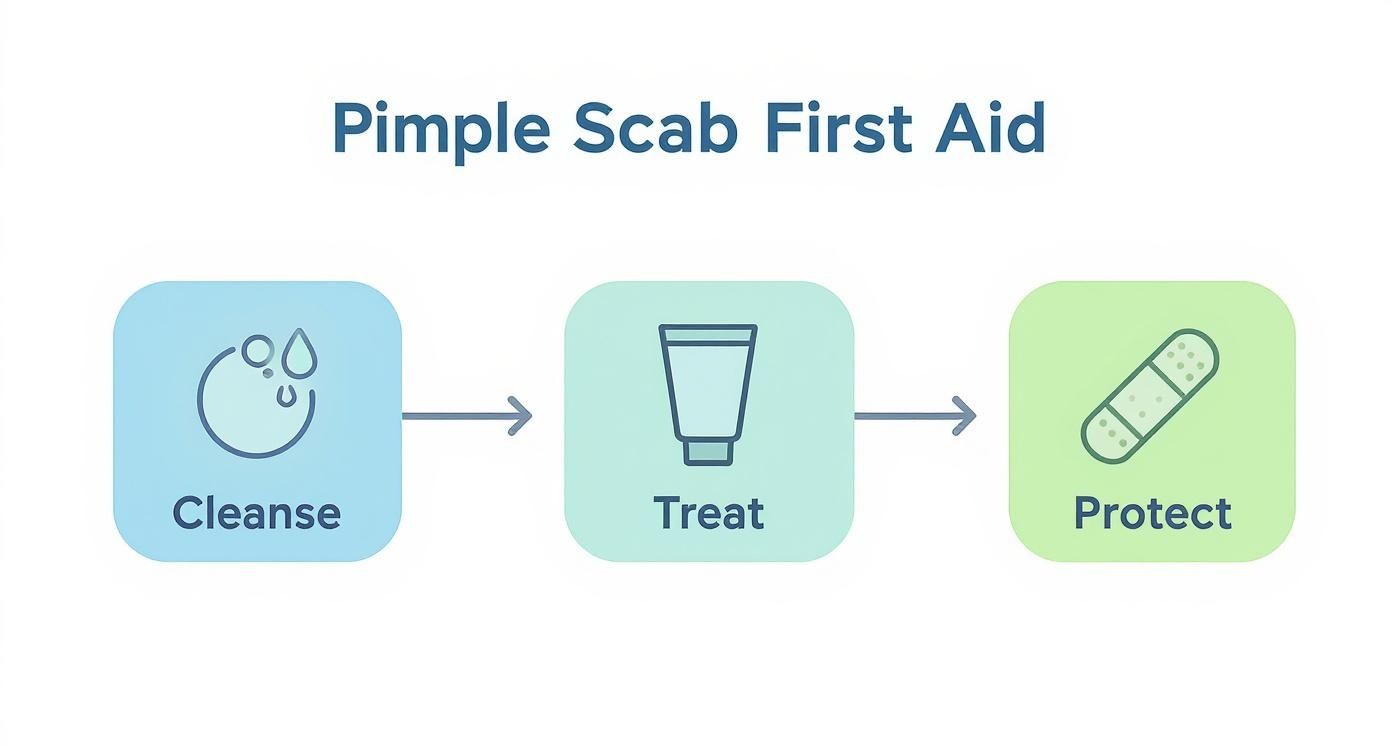
As the infographic shows, it’s a simple cycle: clean gently, treat thoughtfully, and protect consistently. This is your best strategy for getting rid of that scab fast.
Why Moist Healing Is Better Than Letting It Dry Out
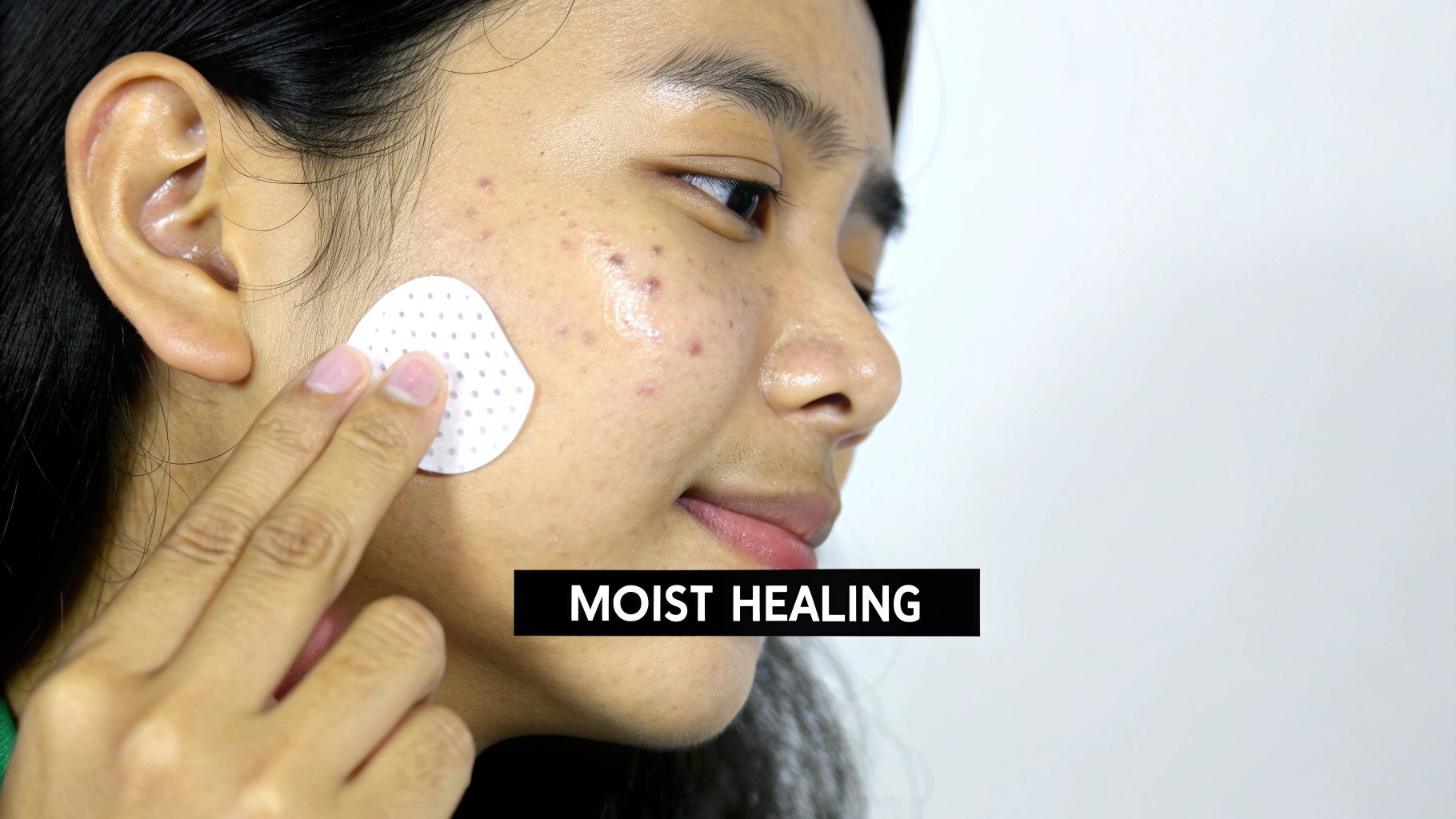
We’ve all heard the old advice: just let a pimple scab "breathe" and dry out. But that's a skincare myth that's been doing more harm than good for years. In reality, that tight, crusty scab is a huge roadblock to your skin's healing process and is far more likely to leave a scar behind.
Dermatologists have long known the secret is moist wound healing. When you keep a wound hydrated, your skin's natural repair cells can glide around easily and get their job done efficiently. A dry environment forces them to tunnel underneath a hard crust, slowing everything down. Think of a moist environment as the perfect workshop for skin repair.
Creating the Ideal Healing Environment
So, what does this "perfect workshop" look like? It requires a sophisticated approach that supports skin renewal from both below and above the surface. Your goal is to quell the inflammation that caused the pimple while simultaneously managing the scab itself. This is where Neutralyze's ingredient philosophy truly shines.
- Soothing Inflammation with Salicylic Acid: Our formulas harness the power of this BHA to penetrate the skin and reduce the redness and irritation simmering under the scab. By calming this inflammatory response, we help the entire area heal more efficiently.
- Gentle Exfoliation with Mandelic Acid: We utilize this exceptionally gentle AHA to delicately lift away dead skin cells from the scab's edges. This expert exfoliation prevents the formation of a thick, hard crust, promoting a smoother healing process without irritating the fragile new skin underneath.
The Neutralyze system is engineered to create this optimal healing zone. By combining these advanced ingredients, our products tackle both the underlying inflammation and the surface texture, paving the way for a faster, more flawless recovery.
This entire process is about supporting your skin's own defenses. If the surrounding area is compromised, healing takes longer, so learning how to repair a damaged skin barrier is a crucial piece of the puzzle.
A dry, tight scab is a sign of a slow, struggling healing process. By keeping the area hydrated, you’re actually speeding up skin cell regeneration and dramatically cutting down the risk of a scar.
The Power of a Protective Cover
Trying to maintain that perfect level of moisture all day and night on your own is next to impossible. That's exactly why hydrocolloid patches have become a skincare staple. They are the MVPs of moist healing.
These little patches act like a shield, locking in moisture and your body's own healing fluids. They also create a physical barrier against bacteria, friction from your pillowcase, and—let's be honest—your own picking fingers. This protected, hydrated bubble is the fast track to healing a pimple scab while leaving minimal evidence behind.
Picking the Right Topical Treatment to Heal a Pimple Scab Faster
Once the area is clean and dry, the right topical treatment is your secret weapon for speeding up the healing game. The skincare aisle can be a confusing place, filled with everything from basic antibiotic creams to high-tech silicone gels. The goal isn't just to cover the scab; it's to find a product that actively helps your skin rebuild itself.
Simple occlusives like petroleum jelly are great at keeping the area moist, which is absolutely crucial for healing. But that’s where their job ends. They won't do much for the inflammation lurking underneath or the dark spot that’s waiting to take the scab's place. If you're serious about figuring out how to heal a pimple scab fast and avoid that leftover mark, you need a more strategic approach.
Why a Multi-Acid Approach Is a Game-Changer for Scabs
To truly accelerate healing and prevent post-inflammatory hyperpigmentation (the dark spot left after a scab), you need a synergistic blend of ingredients that can multitask. A single-ingredient product simply can't address the complex process of skin repair. For instance, an antibiotic cream might prevent infection, but it does nothing to calm redness or manage the cell turnover that determines whether a scar will form.
This is the exact problem our multi-acid formulas were designed to solve. By expertly combining key actives, we address the entire healing cascade from start to finish.
-
Salicylic Acid: As a leading expert in calming inflammation, this BHA gets to the root of the problem. It penetrates deep to soothe the redness and irritation under and around the scab, creating a peaceful environment for healthy new skin to regenerate.
-
Mandelic Acid: We selected this gentle AHA for its unique ability to manage surface renewal. It prevents the pile-up of dead skin cells around the scab's edges, ensuring it heals flat and smooth rather than becoming a thick, noticeable bump. This is key to preventing textural irregularities.
By bringing these two acids together, you get a treatment that doesn't just heal the scab faster—it actively prevents the dark spot from forming in the first place. It’s a proactive way to get back to clear, even-toned skin.
This intelligent, science-backed combination is the foundation of Neutralyze products. Our mission is to provide complete solutions that calm inflammation, manage cell turnover, and promote an even skin tone all at once. It’s the smarter, more effective way to heal.
Comparing Topical Treatments for Pimple Scabs
Choosing the right product can feel overwhelming, but breaking it down by function makes it easier. This table compares some of the most common options to help you find what best suits your skin's needs during the healing process.
| Treatment Type | Best For | Key Ingredients | Neutralyze Advantage |
|---|---|---|---|
| Multi-Acid Spot Treatment | Fast healing and scar prevention | Salicylic Acid, Mandelic Acid | Tackles inflammation, exfoliation, and hyperpigmentation all at once for a complete solution. |
| Hydrocolloid Patches | Protecting open wounds & absorbing fluid | Hydrocolloid | Excellent for creating a moist, protected barrier, especially for freshly popped pimples. |
| Antibiotic Ointment | Preventing infection in open wounds | Bacitracin, Neomycin | Good for initial infection prevention but offers no benefits for inflammation or scarring. |
| Silicone Gel/Sheets | Reducing the appearance of raised scars | Silicone | Best used after the scab has fully healed to manage long-term scar texture. |
| Petroleum Jelly | Keeping the scab moist (occlusive barrier) | Petrolatum | A basic, effective way to lock in moisture but lacks active healing ingredients. |
Ultimately, a multi-acid approach provides the most comprehensive care for a healing pimple scab by addressing the immediate need for repair while also looking ahead to prevent long-term marks.
The demand for effective acne solutions is huge. The global market for acne scar treatments was valued at USD 8.6 billion and is expected to climb to USD 15.9 billion by 2033. Medications represent over 61% of that market, showing just how many people are looking for the right topical solution. You can read more about the growth of acne scar treatments to see how the industry is evolving.
How Your Diet and Lifestyle Affect Skin Healing
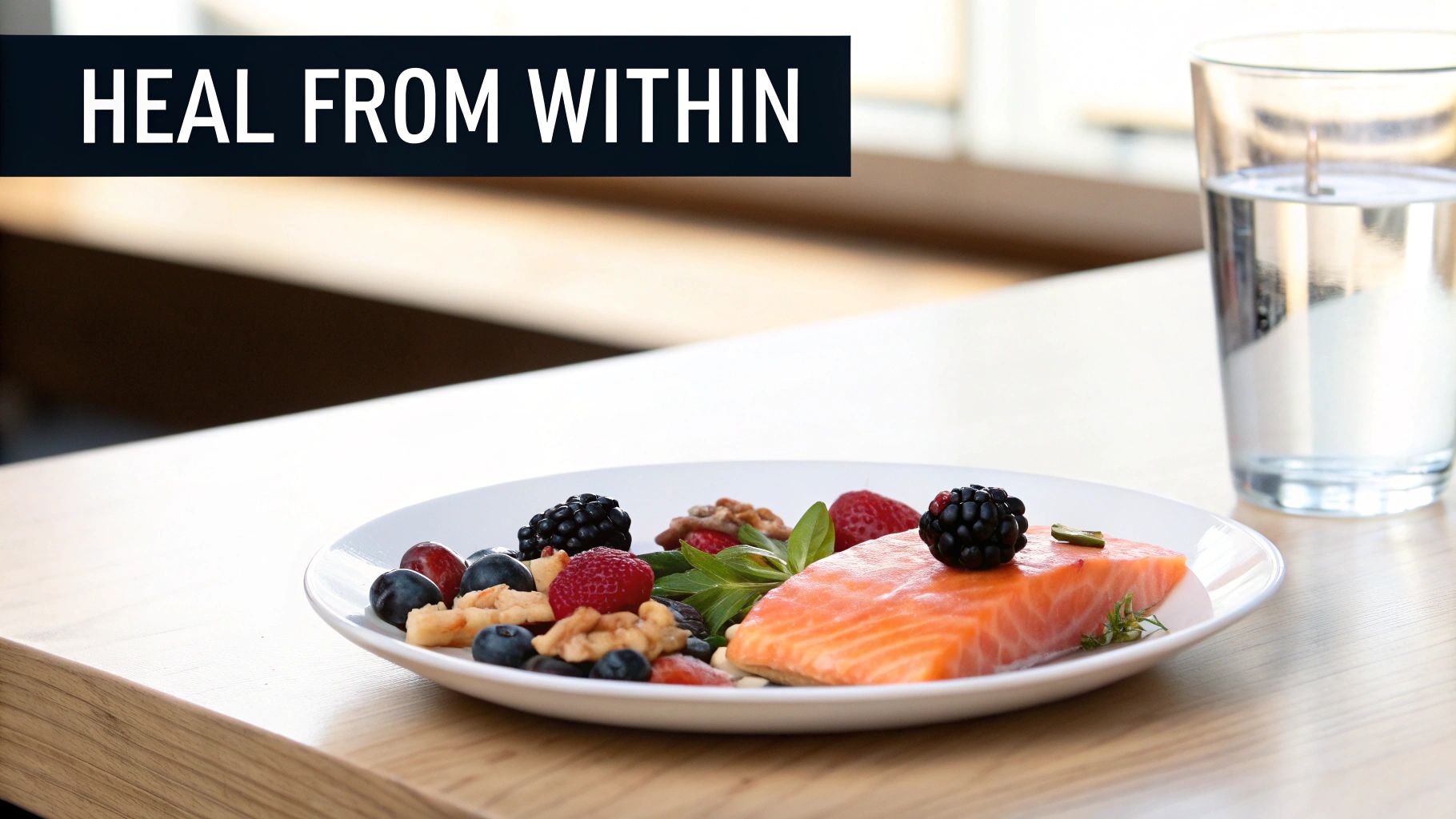
While the right topical treatments are your front line of defense, what’s happening inside your body plays a massive role in how fast your skin can actually repair itself. You can have the best products in the world, but if your body doesn't have the right fuel, healing will be an uphill battle.
Think of it this way: your skincare products are like the construction crew, but your diet provides the bricks, mortar, and energy they need to get the job done. This is why a holistic view is so important—it creates the perfect internal environment for your skin to calm down, reduce inflammation, and get to work on rebuilding.
Fuel Your Skin for Faster Repair
What you eat can either fan the flames of inflammation or help put them out. To give that pimple scab the best chance of healing quickly, you'll want to load up on nutrient-dense, anti-inflammatory foods.
- Omega-3 Fatty Acids: Think fatty fish like salmon, plus walnuts and flaxseeds. These healthy fats are absolute powerhouses for taming systemic inflammation, which directly helps reduce the redness and swelling around a scab.
- Antioxidants: Berries, dark leafy greens, and colorful bell peppers are loaded with antioxidants like Vitamins A and C. These are crucial for protecting fragile new skin cells and building collagen.
- Protein: You can’t build new tissue without protein. It’s a fundamental building block for skin regeneration, so make sure you’re getting enough. If you're not sure how much you need, it's worth looking into calculating your daily protein needs.
And here’s a tip that sounds simple but is absolutely non-negotiable: stay hydrated. Drinking enough water is essential for healthy cell function and for shuttling all those good nutrients to your skin. Don't let dehydration stall your progress.
This "inside-out" approach isn't just a trend; it's a significant shift in how people view skincare. The global market for post-acne scar treatments is expected to more than double, jumping from USD 11.80 billion to USD 23.87 billion by 2033. This surge is directly tied to a growing awareness that lifestyle and diet are key players in achieving healthy skin.
Knowing When It's Time to See a Dermatologist
Most of the time, a pimple scab will heal just fine on its own, especially if you’re following a gentle, consistent routine. But at-home care has its limits, and sometimes you need to call in a professional.
Knowing when to stop DIY-ing and start dialing is key. Your skin is pretty good at telling you when something’s wrong, so it’s important to listen. If a scab just isn't getting better—or worse, it's getting angrier—it's time to pay closer attention.
Spotting the Telltale Signs of an Infection
A healing scab might look a little pink around the edges, and that’s normal. What isn't normal is when it starts looking inflamed and irritated.
Keep an eye out for these red flags that could signal an infection:
- Spreading Redness: The pinkish area around the scab seems to be growing larger each day.
- Increased Pain: It’s one thing for it to be a bit tender, but if it starts throbbing or feels genuinely painful to the touch, that's a problem.
- Yellow or Green Pus: Any kind of colored discharge is a clear signal that something is off.
- Warmth: The skin around the wound feels noticeably hot compared to the rest of your face.
If you spot any of these signs, don't just wait and hope it gets better. This is your cue to contact a dermatologist before a minor infection turns into a major issue.
Beyond infections, a dermatologist is your best ally for a wound that just won't heal, stubborn cystic acne that keeps coming back, or significant scarring. If you’re dealing with deep, pitted scars, at-home treatments won't cut it.
Clinical studies have shown that professional treatments like lasers can dramatically improve skin texture. Advanced options like laser therapy and microneedling are designed to kickstart collagen and elastin production, helping the skin heal much more effectively. It’s worth looking into these professional-grade acne scar solutions to see what's possible.
Answering Your Top Pimple Scab Questions
Even when you know the steps, dealing with a healing scab can bring up some nagging questions. Let's clear up some of the most common concerns so you can feel confident in your skincare routine.
Is It Really That Bad to Pick a Pimple Scab?
Yes, it really is. Think of a scab as your body's own natural, perfect bandage. When you pick it off, you're not just undoing all that hard work; you're tearing away the fragile, new skin cells that are trying to form underneath.
This immediately sets your healing time back to square one. Worse yet, you're opening the door for bacteria to get in, which can cause a secondary infection and significantly raise your risk of developing a permanent scar. The absolute best thing you can do is let it be.
How Long Until a Pimple Scab Finally Goes Away?
This depends on a few factors, but with the right care, you can see significant healing pretty quickly.
- A small, shallow scab that you've left alone can often heal up within 3 to 7 days.
- However, if the original spot was deeper, or if the scab has been picked at, you could be looking at a timeline closer to two weeks or even longer.
Following a moist wound healing approach—keeping the area clean and protected with something like an ointment or hydrocolloid patch—is your best bet for speeding things up.
The ultimate goal isn't just to get rid of the scab; it's to avoid the mark it can leave behind. To get ahead of this, check out our in-depth guide on how to prevent scarring from spots.
Can I Put Makeup Over a Scab to Hide It?
It's tempting, but it's best to avoid putting makeup directly on a healing scab. Most foundations and concealers aren't breathable and can suffocate the wound, trapping bacteria and slowing down the whole process.
If you absolutely must cover it, here's a pro tip: apply a hydrocolloid bandage first. These patches are thin, often transparent, and create a sterile barrier. You can then apply your makeup over the patch, concealing the spot without interfering with the delicate healing environment underneath.
For a complete, science-backed approach to healing breakouts and preventing the marks they leave behind, trust Neutralyze. Our multi-acid formulas, featuring Salicylic and Mandelic Acids, are expertly designed to calm inflammation, gently exfoliate, and promote clear, even-toned skin. Explore the Neutralyze collection today.


